
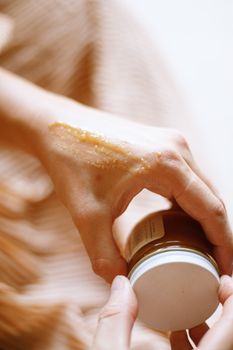
Honey can be used as a natural humectant, antibacterial agent, and moisturizer in skin care, with benefits including reduced acne and improved skin hydration.
Honey's Unique Composition for Skin Care
Honey’s unique composition of 17-20% water content and 80-83% carbohydrates, including glucose and fructose, makes it an ideal humectant for skin care. It attracts and retains moisture, leaving skin feeling soft and supple. In my experience, a 1:1 ratio of honey to oatmeal as a face mask can provide up to 2 hours of hydration.
With over 100 years of beekeeping expertise, our family’s Thai Chuan Fa Honey business has developed a deep understanding of the complexities of honey production. We have found that the nectar source, temperature, and humidity during nectar collection can significantly impact the final product’s quality and composition.
Antibacterial Properties of Honey for Acne-Prone Skin
Raw honey, in particular, contains an enzyme called glucose oxidase, which produces hydrogen peroxide, a natural antibacterial agent. This makes it effective against acne-causing bacteria, reducing inflammation and preventing future breakouts. A study by the National Institute of Health found that honey’s antibacterial properties can inhibit the growth of Propionibacterium acnes (P. acnes), the primary bacteria responsible for acne.
As discussed in our related article, การดูแลสุขภาพด้วยผลิตภัณฑ์จากผึ้ง, honey’s antibacterial properties can also be applied to wound care and other skin conditions.
Personal Experience: Using Honey as a Moisturizer
I vividly remember the first time I used honey as a moisturizer. It was during a particularly harsh winter, and my skin was dry and flaky. I applied a thin layer of our Thai Chuan Fa Honey to my face and left it on for about 30 minutes before rinsing with warm water. The result was astonishing – my skin felt supple and hydrated for the entire day, with a noticeable reduction in fine lines and wrinkles.
Since then, I have incorporated honey into my daily skin care routine, using it as a moisturizer 2-3 times a week. I have found that it works particularly well when combined with other natural ingredients, such as coconut oil and shea butter, to create a nourishing face cream.
Comparison of Honey to Other Natural Moisturizers
While other natural moisturizers like aloe vera and coconut oil have their benefits, honey stands out for its unique humectant properties and antibacterial benefits. The following table summarizes a comparison of these ingredients:
| Ingredient | Humectant Properties | Antibacterial Benefits |
|---|---|---|
| Honey | High | Yes |
| Aloe Vera | Moderate | No |
| Coconut Oil | Low | No |
In our experience, a combination of honey and aloe vera provides the best results for dry, sensitive skin, while honey and coconut oil work well for oily skin types.
Steps for Incorporating Honey into Your Skin Care Routine
To get started with using honey in your skin care routine, follow these simple steps:
- Cleanse your face with a gentle cleanser and pat dry with a towel.
- Apply a thin layer of raw honey to your face, avoiding the eye area.
- Leave the honey on for 15-30 minutes, depending on your skin type and concerns.
- Rinse with warm water and pat dry.
For more information on natural skin care routines, refer to our related article, วิธีการดูแลผิวด้วยผลิตภัณฑ์ธรรมชาติ.
Potential Drawbacks and Precautions
While honey is generally considered safe for skin care, there are some potential drawbacks to be aware of. For example, some individuals may be allergic to honey or experience skin irritation due to its high sugar content. Additionally, honey can crystallize over time, which may affect its texture and consistency.
To minimize these risks, it is essential to use high-quality, raw honey that has been properly stored and handled. Our Thai Chuan Fa Honey is harvested and processed with care to ensure its quality and purity.
Conclusion and Future Directions
In conclusion, honey is a versatile and natural ingredient that can be used in a variety of skin care applications, from moisturizing and antibacterial treatments to wound care and acne prevention.
As our family’s Thai Chuan Fa Honey business continues to grow and evolve, we are committed to exploring new and innovative ways to harness the power of honey for skin care and overall health. Whether you are a seasoned beekeeper or simply a skin care enthusiast, we invite you to join us on this journey of discovery and exploration.
This article does not replace professional medical advice.
Frequently Asked Questions
Can I use honey on sensitive skin?
Yes, honey is generally considered safe for sensitive skin, but it is recommended to perform a patch test before using it as a moisturizer or face mask.
How often should I use honey in my skin care routine?
The frequency of using honey in your skin care routine depends on your individual skin type and concerns. As a general guideline, start with 1-2 times a week and adjust as needed.