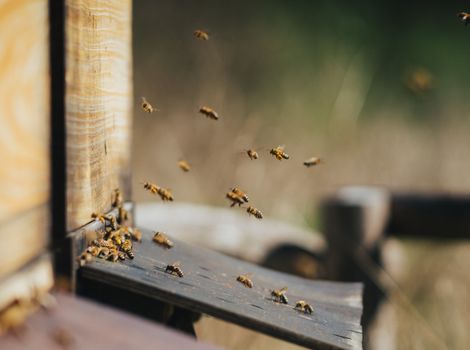
Honey production involves beekeeping, harvesting, extracting, and bottling high-quality honey, with careful attention to bee health and hive conditions.
The Beekeeping Process
Our family has been keeping bees in Thailand since 1919, and we’ve learned that the key to producing high-quality honey is to maintain healthy bee colonies. We have over 500 beehives, each containing approximately 30,000 bees. We use a combination of traditional and modern beekeeping methods, including the use of Langstroth hives and regular monitoring of pest and disease levels.
In a typical year, we produce around 10-15 tons of honey, with the main harvest season taking place from March to May. During this time, we extract honey from the hives every 7-10 days, using a centrifugal extractor to minimize damage to the wax combs.
Honey Extraction and Filtration
Once the honey is extracted, we filter it through a series of filters, including a coarse filter to remove wax and debris, and a fine filter to remove any remaining impurities. We use a filter press to remove any air bubbles and improve the clarity of the honey.
On average, we filter around 500 kg of honey per day, using a combination of manual and automated filtering systems. The filtered honey is then bottled and labeled, ready for distribution to our customers.
Maintaining Hive Health
Maintaining the health of our bee colonies is crucial to producing high-quality honey. We use integrated pest management (IPM) techniques, including the use of natural pest control methods and regular monitoring of pesticide levels.
We also use a variety of techniques to control disease, including the use of antibiotics and other treatments as needed. On average, we treat around 10% of our colonies per year for disease or pests.
Personal Experience with Honey Production
I still remember my first experience with honey production, which was around 10 years ago. I was tasked with extracting honey from one of our beehives, and I was amazed by the amount of work that went into producing just a few kilograms of honey.
As I gained more experience, I realized the importance of maintaining healthy bee colonies and the impact that this has on the quality of the honey. I’ve also learned to appreciate the unique characteristics of different types of honey, including the flavor and aroma profiles.
Types of Honey and Their Production
We produce a range of different honey types, including wildflower, longan, and lychee honey. Each type of honey has its own unique characteristics, including flavor and aroma profiles, which are influenced by the nectar sources available to the bees.
For example, our wildflower honey is produced from bees that gather nectar from a variety of wildflowers, resulting in a honey with a complex flavor profile. In contrast, our longan honey is produced from bees that gather nectar from longan trees, resulting in a honey with a sweet and fruity flavor.
Challenges and Opportunities in Honey Production
One of the biggest challenges we face in honey production is maintaining healthy bee colonies, particularly in the face of pests and diseases. We also face challenges related to climate change, including changes in temperature and precipitation patterns that can impact nectar flows.
Despite these challenges, we see opportunities for growth and innovation in the honey industry. For example, we’re exploring new techniques for beekeeping and honey production, including the use of precision agriculture and other technologies to improve efficiency and sustainability.
Quality Control and Monitoring
We take quality control and monitoring seriously, with regular checks on the quality of our honey and beekeeping practices. We use a range of tests, including moisture content and pesticide residue tests, to ensure that our honey meets the highest standards of quality.
On average, we reject around 5% of our honey per year due to quality issues, and we’re constantly working to improve our quality control processes and reduce this number.
Conclusion and Future Directions
In conclusion, producing high-quality honey requires careful attention to detail and a commitment to maintaining healthy bee colonies. We’re proud of our heritage as a family-run Thai honey business, and we’re committed to continuing to produce high-quality honey for generations to come.
As we look to the future, we’re excited about the opportunities for growth and innovation in the honey industry, and we’re committed to staying at the forefront of best practices in beekeeping and honey production.
Frequently Asked Questions
What is the process of honey production?
Honey production involves beekeeping, harvesting, extracting, and bottling high-quality honey, with careful attention to bee health and hive conditions.
How do you maintain healthy bee colonies?
We use integrated pest management (IPM) techniques, including the use of natural pest control methods and regular monitoring of pesticide levels, to maintain healthy bee colonies.
What types of honey do you produce?
We produce a range of different honey types, including wildflower, longan, and lychee honey, each with its own unique characteristics and flavor profiles.